How to Increase Your Miner Power for Better Cryptocurrency Mining Results?
In the world of cryptocurrency mining, maximizing your Miner Power is essential for success. This power determines the efficiency and speed at which transactions are processed. Improving it can lead to better mining results and higher rewards. However, achieving optimal Miner Power requires a blend of knowledge, investment, and strategy.
Investing in high-quality hardware is crucial. GPUs and ASIC miners play a significant role in determining your output. Choosing the right equipment is not enough. You must understand how to configure and optimize it. Software settings can greatly influence Miner Power. Regular updates and troubleshooting are often necessary for maintaining peak performance.
Many miners overlook the importance of electricity costs. High utility bills can erode profits. Therefore, consider energy-efficient practices. Often, miners work in isolation, missing out on valuable community insights. Participating in forums and collaborating with others can provide new perspectives. Reflecting on your current setup can reveal areas needing improvement, ensuring you stay competitive in this dynamic market.
Understanding Miner Power and Its Importance in Cryptocurrency Mining
Miner power plays a crucial role in cryptocurrency mining. It refers to the computing power that miners use to validate transactions and secure the network. A report from Cambridge Centre for Alternative Finance highlighted that Bitcoin mining alone consumes around 130 terawatt-hours of electricity annually. This staggering number emphasizes the importance of optimizing miner power for better efficiency and results.
Increasing miner power involves several factors, including hardware choices and energy efficiency. For instance, using ASIC miners typically provides greater hash rates compared to GPUs. According to a study by Blockdata, the latest ASIC miners can achieve hash rates exceeding 100 TH/s, while older models lag significantly. However, the effectiveness of miner power also heavily relies on the electricity cost and environmental impact. Many miners face challenges in balancing profitability with sustainability.
It's essential to evaluate these parameters critically. Some might invest heavily in state-of-the-art hardware but overlook electricity costs. In regions where energy is expensive, returns may diminish rapidly. Furthermore, high miner power can lead to increased heat generation, which necessitates additional cooling solutions. These added expenses must be factored in to achieve a comprehensive understanding of miner power's true benefits.
Miner Power and Its Impact on Cryptocurrency Mining Efficiency
This graph illustrates the correlation between miner power (in TH/s) and the monthly mining rewards (in USD) for various mining setups. As shown, higher miner power generally leads to increased mining rewards, although factors such as energy costs and network difficulty also play crucial roles.
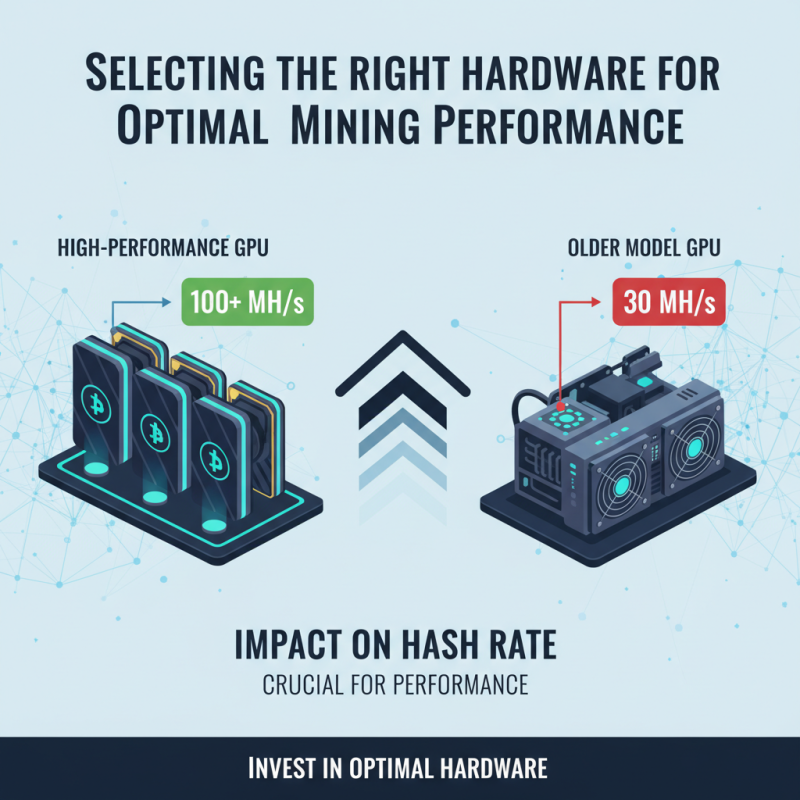
Selecting the Right Hardware for Optimal Mining Performance
When it comes to cryptocurrency mining, selecting the right hardware is crucial for enhancing performance. Recent industry reports indicate that mining rigs can significantly impact hash rates. For instance, a high-performance GPU can achieve a hash rate of over 100 MH/s, while older models may only reach 30 MH/s. This stark difference illustrates the importance of investing in optimal hardware.
Consider the energy consumption of your mining setup. A powerful miner may consume 2000W, which could lead to increased electricity bills. Balancing performance and energy efficiency is vital. Monitoring software can help you evaluate your rig's power usage in real time. Keep an eye on the hash rate to ensure you're getting the most out of your equipment.
Tips: Regularly updating your hardware can make a noticeable difference. Also, consider airflow and cooling solutions. Overheating can reduce your hardware's lifespan and overall efficiency. Engage with community forums to gain insights into effective setups and performance tweaks. This collective knowledge can lead to better mining outcomes.
Overclocking Techniques to Boost Mining Efficiency
Overclocking is an essential technique in cryptocurrency mining. It enhances a miner’s performance by increasing the speed at which they solve complex algorithms. Studies indicate that effective overclocking can boost hash rates by 10-25%. However, this approach requires careful adjustment and monitoring.
When overclocking, start by gradually increasing your GPU clocks. Ensure your system remains stable; any crashes may indicate excessive settings. Temperatures should not exceed 85 degrees Celsius. A high-performance cooling solution, such as liquid cooling, can help. As you adjust voltage, be aware of the risk: higher voltage can lead to overheating and reduced lifespan.
Monitoring software plays a crucial role in managing overclocking settings. Tools like MSI Afterburner allow for real-time adjustments. They provide valuable data on temperature, usage, and hash rates. However, mining’s dynamic nature means constant reevaluation is necessary. Each GPU behaves differently, and what works for one may not suit another. Always document your changes for effective troubleshooting. Balancing performance and longevity is key to successful overclocking.
How to Increase Your Miner Power for Better Cryptocurrency Mining Results? - Overclocking Techniques to Boost Mining Efficiency
| Technique |
Expected Power Increase (%) |
Difficulty Level |
Notes |
| Overclocking GPU |
10-20% |
Medium |
Increases performance, monitor temperatures closely. |
| Adjusting Power Limit |
5-15% |
Easy |
Can improve efficiency significantly with proper settings. |
| Increasing Memory Clock |
5-10% |
Medium |
Enhances data processing speed for better results. |
| Optimizing Mining Software |
Variable |
Easy |
Use the latest software & settings for maximum efficiency. |
| Improving Cooling Systems |
Indirect |
Medium |
Better cooling can prevent throttling and maintain performance. |
Optimizing Power Consumption for Increased Mining Output
When it comes to cryptocurrency mining, optimizing power consumption plays a crucial role in enhancing mining output. Research shows that energy costs can account for up to 60% of overall mining expenses. Consequently, miners must focus on minimizing energy waste while maximizing their computational capabilities. Utilizing energy-efficient mining hardware is essential. Recent reports indicate that the latest ASIC miners significantly reduce wattage without sacrificing hash rates. This shift can lead to a more favorable power-to-performance ratio.
Moreover, temperature management is a critical factor. Keeping mining equipment cool can lead to increased efficiency. High temperatures can cause hardware to throttle, reducing output. Implementing effective cooling solutions, such as fans and liquid cooling systems, can optimize performance. A study found that optimal temperature ranges contribute to a 10% boost in output. Miners should also consider their operational environment. Choosing locations with lower electricity costs can enhance profit margins.
Reflecting on these strategies, it's vital for miners to reassess their setups frequently. While energy-efficient hardware can be an initial investment, the long-term benefits often outweigh the costs. Continuous monitoring of power consumption can reveal areas needing improvement. In the competitive landscape of cryptocurrency mining, every watt counts. Understanding and optimizing power consumption is not simply beneficial; it is necessary for success.
Utilizing Mining Pools to Leverage Collective Power and Resources
Mining pools provide a strategic advantage for cryptocurrency miners. By combining resources, miners can tackle complex calculations more efficiently. A report by Cambridge Centre for Alternative Finance shows that almost 60% of Bitcoin mining occurs in pools. This collective effort boosts the probability of earning rewards. Instead of competing solo, miners share the burden and reward.
Joining a mining pool can significantly increase profitability. Individual miners often face fluctuating rewards. In contrast, pools distribute payments in smaller, more regular amounts. According to Blockchain.com, miners earn 25% more when part of a pool compared to solo mining. However, it's crucial to choose a reliable pool. Not all pools are trustworthy, and some keep high fees or have subpar technology.
Participating in a pool requires some level of sacrifice. You might not see immediate, large rewards. Yet, the steadiness of smaller payouts can be more beneficial over time. A study from CoinShares indicates that miners prioritize consistent income to cover equipment and electricity costs. Mind the inherent risks and fees when joining a pool. Your earnings may vary based not only on individual effort but also on the efficiency of the pool you select.