Top 10 Crypto Miners For Sale Where To Buy?
Searching for a Crypto Miner For Sale can feel like choosing equipment from a crowded warehouse. Product photos look polished, but the real details are often hidden in electricity rates, machine condition, and warranty terms. A miner that seems affordable may consume more power than expected. It may also require additional cooling, ventilation, networking, and maintenance.
This guide examines ten crypto miners available through reputable manufacturers, distributors, and verified marketplaces. It considers hash rate, power efficiency, algorithm support, operating noise, delivery conditions, and realistic profitability. Jaran Mellerud, a recognized Bitcoin mining analyst, has described the industry this way: “Bitcoin mining is a game of survival of the fittest.” That warning matters. Hardware performance changes as network difficulty, coin prices, and energy costs move.
Numbers need context. A machine producing impressive daily revenue may still lose money in a high-cost location. Buyers should request serial numbers, test reports, purchase invoices, and clear warranty policies. Used equipment deserves extra attention. Dust around fans, damaged cables, unstable hash boards, and excessive temperature readings can reveal expensive problems. Ask for proof before paying.
No ranking can guarantee returns. Markets remain unpredictable. That is the uncomfortable part. The most suitable Crypto Miner For Sale depends on your electricity contract, technical skills, local operating requirements, and risk tolerance. This overview aims to support careful decisions, not rushed purchases. Legal compliance, responsible energy use, and secure payment practices should remain part of every evaluation.
Market Scope: Why Bitcoin ASIC Miners Lead the 2025 Hardware Market
Bitcoin ASIC miners lead the 2025 hardware market because they deliver specialized SHA-256 computing power. General-purpose computers cannot match their efficiency. For a top-ten buying shortlist, compare hashrate, energy efficiency, power draw, noise, warranty, and delivery terms. A useful efficiency target is measured in joules per terahash. Lower is better.
Buy through established equipment distributors, verified manufacturers, or reputable secondary-market platforms. Request clear serial numbers, testing records, invoices, and warranty conditions. A used unit may look affordable, yet worn fans and unstable hashboards can increase repair costs. Ask for recent operating screenshots. Do not rely on catalogue images alone.
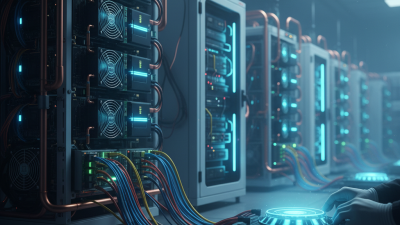
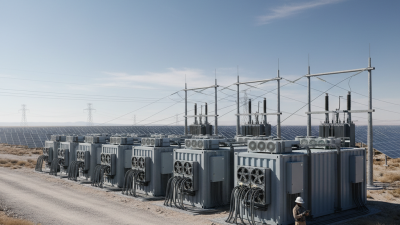
Power planning matters more than many new buyers expect. A single high-performance miner can draw several kilowatts continuously and produce intense heat. Check local electricity rates, electrical capacity, ventilation, and noise limits before ordering.
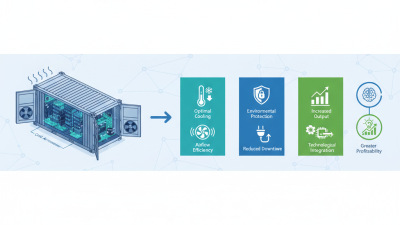
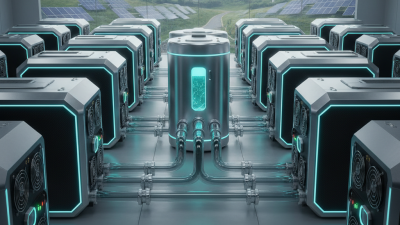
Liquid cooling can improve thermal control, but it adds installation complexity. Air cooling remains simpler for smaller sites.
Experience shows that the cheapest machine is rarely the safest choice. Profit calculators also change quickly with network difficulty, coin price, and energy costs. My own assessment would include a conservative electricity estimate and a repair reserve. Even then, forecasts can fail. That uncertainty deserves attention. Choose equipment with transparent specifications, lawful operation, and accessible technical support.
Top 10 Crypto Miners Ranked by TH/s, J/TH, Price, and 3.125 BTC Reward
Choosing the top 10 crypto miners for sale requires more than comparing advertised TH/s. I would rank each machine by four practical measures: computing power, energy efficiency, purchase price, and expected share of the 3.125 BTC block reward. The reward belongs to the network’s successful block finder, not to every individual miner. That distinction matters.
The strongest candidates usually deliver high TH/s with low J/TH, but efficiency can hide costly details. A ten-unit shortlist should include the highest-output model, the best low-power model, three balanced mid-range machines, and five lower-priced options. Record each unit’s purchase cost, shipping, warranty, noise level, and daily electricity use. A miner drawing 3,000 watts can consume about 72 kWh daily. At $0.10 per kWh, that is $7.20 before cooling or maintenance.
Price changes quickly. So does mining difficulty. Use current market listings, pool statistics, and verified power readings instead of relying only on seller claims. I would favor a slightly slower machine with 20 J/TH over a faster unit using 35 J/TH. That choice may be less impressive on paper, but more durable in a home operation. My own ranking would remain provisional, because exchange rates, network difficulty, and local power prices can change the result overnight. Check the numbers twice.
Top 10 Crypto Miners For Sale Where To Buy? - Top 10 Crypto Miners Ranked by TH/s, J/TH, Price, and 3.125 BTC Reward
| Rank |
Anonymous Miner Class |
Hash Rate |
Efficiency |
Estimated Power |
Indicative Price (USD) |
Cooling |
Typical Buying Channel |
Block Subsidy Reference |
| 1 |
Hydro-Cooled 470 TH/s Class |
470 TH/s |
12.0 J/TH |
5,640 W |
$6,500–$10,500 |
Hydro |
Specialist ASIC distributor |
3.125 BTC |
| 2 |
Air-Cooled 270 TH/s Class |
270 TH/s |
13.5 J/TH |
3,645 W |
$3,800–$6,500 |
Air |
Authorized reseller or mining marketplace |
3.125 BTC |
| 3 |
Air-Cooled 234 TH/s Class |
234 TH/s |
15.0 J/TH |
3,510 W |
$3,200–$5,600 |
Air |
Specialist ASIC distributor |
3.125 BTC |
| 4 |
Air-Cooled 200 TH/s Class |
200 TH/s |
17.5 J/TH |
3,500 W |
$2,400–$4,400 |
Air |
Mining equipment retailer |
3.125 BTC |
| 5 |
Air-Cooled 190 TH/s Class |
190 TH/s |
19.0 J/TH |
3,610 W |
$2,100–$3,900 |
Air |
Authorized reseller or used-equipment market |
3.125 BTC |
| 6 |
Air-Cooled 186 TH/s Class |
186 TH/s |
18.5 J/TH |
3,441 W |
$2,000–$3,800 |
Air |
Mining marketplace or specialist reseller |
3.125 BTC |
| 7 |
Air-Cooled 164 TH/s Class |
164 TH/s |
20.8 J/TH |
3,411 W |
$1,700–$3,200 |
Air |
Used-equipment market |
3.125 BTC |
| 8 |
Air-Cooled 151 TH/s Class |
151 TH/s |
21.5 J/TH |
3,247 W |
$1,500–$2,900 |
Air |
Mining equipment retailer |
3.125 BTC |
| 9 |
Air-Cooled 140 TH/s Class |
140 TH/s |
21.5 J/TH |
3,010 W |
$1,200–$2,500 |
Air |
Used-equipment market or reseller |
3.125 BTC |
| 10 |
Air-Cooled 120 TH/s Class |
120 TH/s |
23.0 J/TH |
2,760 W |
$850–$1,900 |
Air |
Used-equipment market |
3.125 BTC |
Data notes: Hash rate, efficiency, and power figures represent common specifications for current SHA-256 ASIC miner classes. Prices are indicative USD ranges that vary by condition, purchase volume, shipping, import duties, and market timing. The 3.125 BTC figure is the Bitcoin block subsidy after the 2024 halving; it excludes transaction fees and is paid to the winning block producer rather than to each individual miner.
Ownership Costs: Electricity, Pool Fees, Shipping, Warranty, and Break-Even Data
Buying one of the top ten crypto miners for sale requires more than comparing advertised hash rates. Electricity usually dominates ownership costs. A 3,000-watt machine running continuously uses about 2,160 kWh monthly. At $0.08 per kWh, the bill reaches roughly $173 before cooling. At $0.15, it becomes $324. Cambridge’s Digital Mining Industry Report identifies electricity access and pricing as major mining profitability factors.
Pool fees commonly range from 0.5% to 3% of mining revenue. That difference appears small, but it compounds during weak market conditions. Shipping can add $50 to $300, while import duties and regional taxes may apply. Warranty terms deserve closer attention. Some sellers cover control boards, but exclude fans, power supplies, or damage caused by unstable electricity. Read the exclusions.
Break-even calculations should use conservative assumptions. For example, if a miner costs $2,000, consumes 3,000 watts, and earns $8 daily before electricity, an $0.08 rate leaves about $2.24 before pool fees. The simple payback period exceeds two years, excluding repairs. CoinShares’ 2024 mining analysis showed how sharply production economics can change when energy prices and network difficulty rise. Hashprice also moves quickly. Too quickly, sometimes. Calculate with current network difficulty, local power rates, shipping costs, and a 10–20% repair reserve before choosing a seller.
Safety Checklist: Verify Hashrate, Efficiency, Authenticity, and After-Sales Support
Top 10 Crypto Miners For Sale: Where To Buy?
Buying a crypto miner starts with evidence, not attractive photographs. Request a recorded hashrate test under stable operating conditions. Compare the result with the advertised figure. A small gap may indicate faulty chips, unsuitable firmware, or thermal throttling. Efficiency matters more than headline speed. The IEA’s Electricity 2024 report estimates that global cryptocurrency mining used roughly 100–150 TWh of electricity in 2023. That range shows why every watt deserves attention. Ask for efficiency in joules per terahash, measured at the wall, not only at the circuit board.
Authenticity checks should include serial numbers, clear internal photographs, and a verifiable purchase trail. Match the control-board firmware with the seller’s documentation. Check whether cooling fans, power cables, and hash boards are original. Refurbished equipment is not automatically bad. Hidden repairs are the problem. Cambridge Centre for Alternative Finance research has repeatedly highlighted changing mining hardware efficiency and regional operating conditions. Therefore, one laboratory result cannot predict your site’s performance. Noise, dust, voltage quality, and ambient temperature can change the outcome.
Tips: Use a short video call before payment. Ask the seller to show the miner starting, reaching stable hashrate, and reporting temperature data. Get written warranty terms, repair timelines, spare-part availability, and shipping responsibility. Avoid vague promises. After-sales support often decides whether a minor fault becomes a week-long shutdown. I would also calculate electricity costs using your real tariff, not an optimistic estimate. That calculation is easy to overlook.