7 Antbox Container Buying Tips for Global Buyers
Buying an Antbox Container for an international project involves more than comparing prices. The right choice depends on what you will store, where the unit will operate, and how it must travel. A container that looks suitable in a product photo may not fit a loading area, clear a doorway, or handle local weather as expected.
Small details matter. Measure the available footprint and access points before requesting a quote. Confirm the internal dimensions, door opening, floor capacity, and any insulation or ventilation needs. Ask what materials and finishes are included, and request clear specifications rather than relying on vague descriptions. If the container will be modified, check how those changes affect usable space, delivery, and maintenance.
Then look beyond the unit itself. Shipping route, unloading equipment, site access, and delivery timing can all affect the final cost. Ask suppliers for itemized quotations, product drawings, realistic lead times, and details about inspection or after-sales support. Compare offers on the same specifications. A low price can leave important gaps.
Even experienced buyers can overlook one measurement. It happens. These seven buying tips help global buyers ask clearer questions, compare suppliers fairly, and reduce avoidable surprises. They are not a substitute for project-specific checks; requirements vary by site and intended use. A careful review now can prevent a container from arriving only to reveal that one practical detail was missed.
Understanding Antbox Containers and Their Common Applications
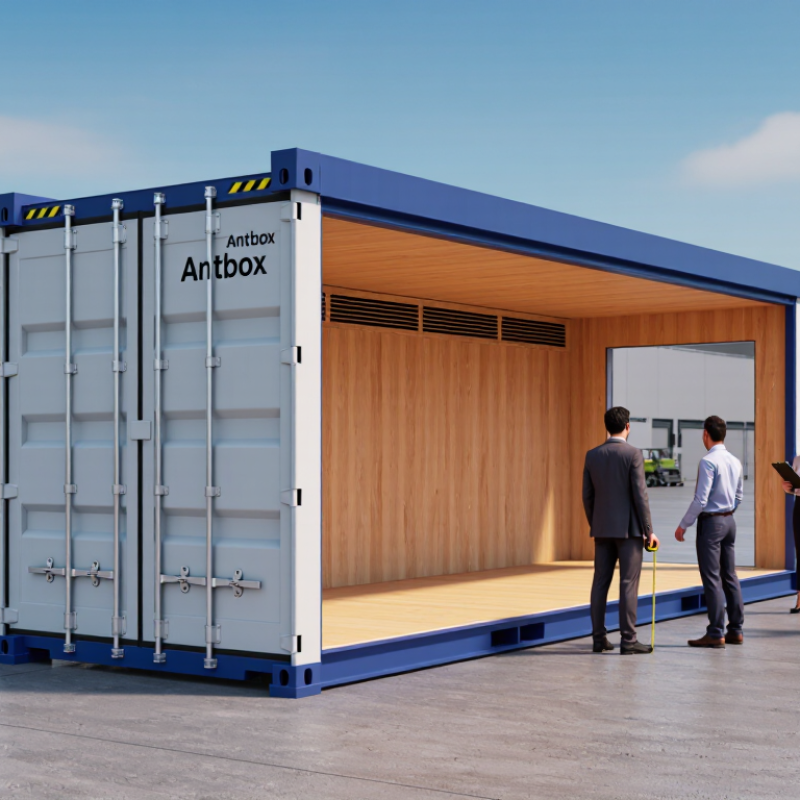
Antbox containers are modular steel units designed for fast assembly, relocation, and repeated use. They commonly include insulated panels, a rigid frame, doors, windows, and service openings. Their layout can support offices, guard rooms, storage areas, temporary classrooms, and worker accommodation. A finished unit may look simple, but its performance depends on panel thickness, floor loading, ventilation, and weather sealing.
In project reviews, I have seen buyers focus on appearance and overlook local climate. That mistake can cause condensation, heat buildup, or uncomfortable indoor temperatures. Hot regions may require reflective roofing and stronger ventilation. Cold regions need better insulation and protected plumbing. Coastal sites demand corrosion-resistant coatings. Always compare the container’s dimensions with transport limits, crane access, foundation space, and local building requirements.
The best application depends on daily use. A site office needs lighting, data cables, safe electrical circuits, and adequate windows. Storage use requires a level floor, secure locks, and clear loading paths. Accommodation needs fire protection, sanitary connections, emergency exits, and documented material performance. Request drawings, load data, coating details, and inspection records before placing an order. Check whether replacement panels and electrical parts are available in the destination country. I once underestimated delivery-site access, and the installation schedule changed immediately. Small details matter.
Defining Capacity, Size, and Configuration Requirements
7 Antbox Container Buying Tips for Global Buyers
Defining capacity starts with the cargo, not the container label. A standard 20-foot unit offers about 33 cubic meters internally. A 40-foot unit provides roughly 67 cubic meters. High-cube versions add height, but usable capacity still depends on door clearance, pallet dimensions, and stacking limits. ISO 668 establishes common external dimensions, yet manufacturers may show slightly different internal measurements. Check the technical drawing.
Weight can become the hidden restriction. A container may have enough volume but exceed local road limits when fully loaded. Record cargo weight, pallet weight, tare weight, and the planned transport route. UNCTAD reports that more than 80% of global merchandise trade by volume moves by sea. However, the final delivery may involve narrow roads, bridges, or cranes with lower limits. Volume alone is not a safe buying guide.
Configuration should follow the working environment. Choose a dry unit for general storage, a high-cube unit for tall goods, and a reefer only when temperature control is essential. Open-side or open-top designs improve access, but they can increase maintenance and handling costs. For modular spaces, confirm insulation, ventilation, electrical entry points, floor loading, and fire-safety requirements. Field checks often find one overlooked detail: the door opens, but the equipment cannot turn inside. Measure the loading path. Then measure it again. Some specifications remain unclear until installation day.
Checking Materials, Features, and Quality Standards
When comparing container materials, ask for the steel grade, coating system, and repair history—not just a product photo. Inspect door edges, corner castings, weld seams, and the floor for corrosion, distortion, or soft spots. A flashlight helps reveal pinholes around patched areas. Small details matter. For standardized dimensions and testing, check whether specifications align with ISO 668 and ISO 1496; request documented inspection results rather than accepting a verbal claim. For timber floors, ask about treatment records and moisture condition, since damp boards can conceal damage.
Features should match the route and cargo: ventilation openings, locking points, insulation, or reinforced floors may be useful, but each adds maintenance needs. Confirm usable internal dimensions, door clearance, tare weight, and payload on the actual unit.
The World Shipping Council reported 221 containers lost at sea in 2023, compared with 661 in 2022, in its containers-lost-at-sea survey.
Those figures concern shipping losses, not manufacturing defects, but they underline why sound structure and secure handling points deserve attention. Ask for recent photographs, serial identification, and a written condition report. I would still question a spotless inspection sheet without close-up evidence; paperwork can miss things.
Comparing Suppliers, Pricing, and International Shipping
Comparing container suppliers takes more than matching prices. Ask for a written specification covering dimensions, materials, door hardware, floor capacity, and included accessories. Request recent photos of the actual unit, not only polished catalog images. Check whether the quoted price includes inspection, loading, and export documentation. A low quote may exclude key services. Compare like with like.
Tip: Ask each supplier for a line-item quote, production timeline, and clear payment milestones. Confirm how defects or shipping damage are documented and handled. Verify that stated certifications apply to the exact product and intended use. Keep written records of changes; a quick message can be easy to misread.
International shipping can reshape the budget. Request estimates for freight, port handling, inland delivery, and possible storage, then confirm which party arranges each step. Share the delivery address and site access details early. A container may reach the port on time but still face delays if local unloading equipment is unavailable. Ask about packing, weather protection, and tracking updates. Transit estimates are not guarantees, and I would leave extra time for uncertainty. That buffer can feel excessive until a vessel schedule changes.
Confirming Documentation, Inspection, and After-Sales Support
7 Antbox Container Buying Tips for Global Buyers
Before payment, request a complete document package from the supplier. It should include technical drawings, material details, packing lists, commercial invoices, and warranty terms. Check that model numbers, dimensions, quantities, and stated load capacities match across every document. Ask whether export papers and destination-country requirements are supported. Small mismatches can delay customs clearance or create costly disputes.
Tip 1: Use an independent inspection before shipment. Inspectors should measure length, width, door alignment, floor condition, weld quality, coating thickness, locks, seals, and ventilation openings. Request dated photos, test records, and a signed report. A video call can reveal useful details, but it cannot replace hands-on inspection. I once assumed clean photos showed a finished product; they did not show hidden rust beneath a frame.
Tip 2: Confirm after-sales support in writing. Ask for a named contact, response time, spare-parts availability, installation guidance, and the warranty claim process. Clarify who pays for replacement parts, transport, and corrective work. Keep serial numbers, delivery records, and inspection evidence in one file. Tip 3: Test communication before ordering many units. Send a detailed question and observe the reply. A quick answer is not always a useful answer. Good support should explain limits, admit uncertainty, and offer practical next steps. Even a strong supplier may miss a detail, so record every agreed correction before production begins.