| 1. Container and Site Preparation |
| Container size |
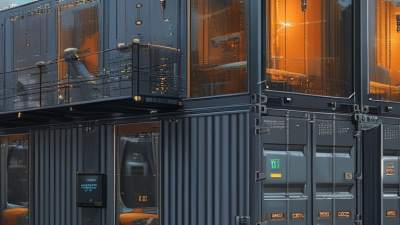
20-foot or 40-foot ISO shipping container |
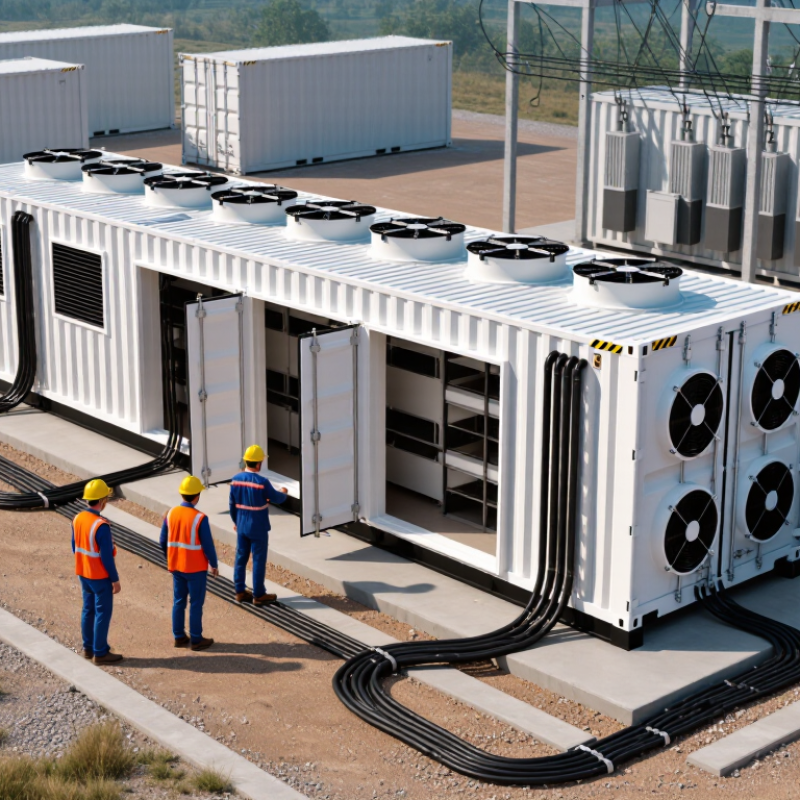
A standard 20-foot container is approximately 6.06 m long, 2.44 m wide, and 2.59 m high externally. A standard 40-foot container is approximately 12.19 m long, 2.44 m wide, and 2.59 m high externally. |
Confirm internal dimensions, door clearance, payload rating, corrosion condition, and whether the unit is new, refurbished, or previously used. |
| Usable floor area |
Allow equipment aisles and electrical clearance |
A 20-foot container provides about 14 m² of external footprint, while a 40-foot container provides about 29.7 m². Actual usable area is lower after racks, distribution boards, cooling equipment, and access paths are installed. |
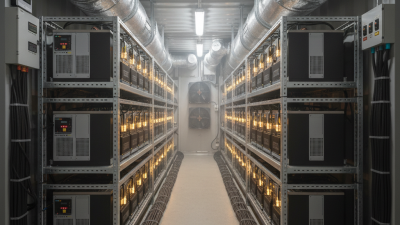
Request a dimensioned floor plan showing rack positions, cable routes, emergency exits, and maintenance access. |
| Foundation |
Level, stable, and well-drained support |
Common options include reinforced concrete pads, concrete strips, steel beams, or engineered foundations. The support must carry the container, mining hardware, electrical equipment, and local environmental loads. |
Obtain a local civil or structural assessment. Keep the container above standing water and provide drainage around the site. |
| Ground clearance |
Elevated above flood and splash-water risk |
The required elevation depends on local flood maps, rainfall, snow, and drainage conditions. There is no universal clearance value suitable for every site. |
Check flood-zone requirements, storm-water flow, access for lifting equipment, and the ability to replace damaged floor sections. |
| Ambient environment |
Dry, dust-controlled, and within equipment limits |
Mining hardware commonly operates most reliably within the temperature and humidity limits specified by its manufacturer. High dust, salt, condensation, and extreme heat shorten service life and increase downtime. |
Measure seasonal temperature, humidity, dust, and air quality before selecting air cooling, evaporative cooling, or liquid cooling. |
| Fire separation |
Follow local fire-code spacing and access rules |
Combustible materials, batteries, transformers, generators, and fuel storage may require separation distances, fire-rated construction, or dedicated enclosures. |
Have the layout reviewed by the local authority having jurisdiction and a qualified fire-safety professional. |
| 2. Power Supply and Electrical Design |
| Estimated mining load |
Calculate from the nameplate rating of every miner |
Total mining load = number of miners × rated input power. For example, 50 machines rated at 3.5 kW each require approximately 175 kW before cooling, networking, lighting, and electrical losses. |
Use measured operating data where possible and include spare capacity for startup, expansion, and seasonal derating. |
| Total facility load |
Mining load plus infrastructure load |
Total facility load = mining load + cooling load + fans or pumps + lighting + network equipment + safety systems + electrical losses. |
Prepare a load schedule instead of sizing the supply only from the miners’ advertised power consumption. |
| Power-capacity margin |
Typically reserve 10%–20%, subject to engineering review |
A reserve margin helps accommodate voltage variation, seasonal conditions, equipment aging, and future additions. The exact value should be confirmed by the electrical engineer and utility. |
Do not operate continuously at the maximum rating of a transformer, switchboard, feeder, generator, or cable. |
| Electrical service |
Three-phase supply is generally preferred for large installations |
Three-phase distribution can reduce conductor size and improve load balancing compared with a similarly sized single-phase installation. Voltage and frequency must match local utility service and mining equipment requirements. |
Confirm available voltage, fault current, service capacity, utility approval, and connection lead time before buying the container. |
| Branch circuits |
Dedicated, labeled circuits with balanced phase loading |
Separate circuits for mining racks, cooling, networking, lighting, control systems, and security make testing and fault isolation easier. |
Require single-line diagrams, circuit schedules, cable specifications, protective-device ratings, and phase-balance records. |
| Distribution equipment |
Switchboard, panelboards, disconnects, and power distribution units |
Equipment should be rated for the system voltage, continuous load, available fault current, enclosure environment, and required interrupting capacity. |
Verify certification, short-circuit ratings, ingress protection, labeling, lockable disconnects, and working clearances. |
| Grounding and bonding |
All metallic parts bonded to the grounding system |
The container shell, racks, cable trays, doors, electrical enclosures, generator frame, and other exposed conductive parts require a code-compliant grounding and bonding design. |
Use a licensed electrician to test continuity, grounding-electrode performance, polarity, insulation resistance, and protective-device operation. |
| Surge and lightning protection |
Surge protective devices and site-specific lightning design |
Surge protection is particularly important where long overhead feeders, frequent storms, or unstable utility conditions are present. |
Coordinate surge devices with upstream protection and assess whether an external lightning protection system is required. |
| Backup power |
UPS for controls and network; generator only when operationally justified |
A UPS can keep network, monitoring, access control, and orderly shutdown systems operating during short interruptions. Backup generation for the full mining load requires substantial fuel, ventilation, maintenance, and permitting. |
Define which loads must remain online and test automatic transfer, runtime, fuel storage, and shutdown procedures. |
| 3. Cooling and Airflow |
| Heat generation |
Nearly all mining electricity becomes heat |
At steady state, a 175 kW mining load produces approximately 175 kW of heat, equivalent to about 597,000 BTU/h, before adding other electrical loads. |
Size cooling and ventilation from the measured or rated heat load, outdoor design temperature, altitude, humidity, and desired operating temperature. |
| Air-cooled design |
Separate intake and exhaust airflow paths |
Short-circuiting hot exhaust air back into the intake raises inlet temperature and reduces equipment stability. Filters reduce dust but also add pressure drop and require maintenance. |
Inspect fan capacity, filter area, louvers, weather protection, exhaust discharge location, and emergency ventilation controls. |
| Cooling alternatives |
Evaporative, immersion, or direct-liquid cooling where appropriate |
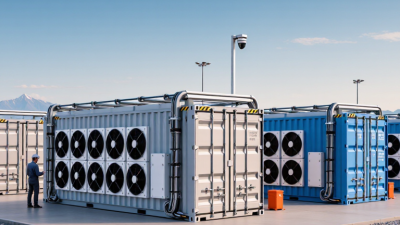
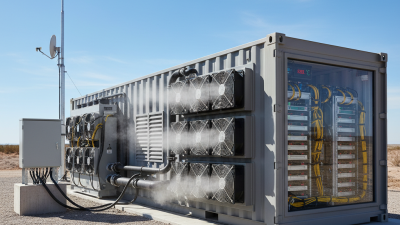
Evaporative cooling can reduce air temperature in dry climates but consumes water. Liquid systems can reduce airflow requirements but add pumps, heat exchangers, fluid management, and leak-control requirements. |
Compare climate, water availability, maintenance skills, electrical consumption, noise, and compatibility with the selected mining hardware. |
| Noise management |
Plan for continuous fan and transformer noise |
Noise levels depend on miner count, fan speed, cooling equipment, transformers, and enclosure design. A shipping container is not automatically a soundproof enclosure. |
Measure sound at the nearest property boundary and comply with local occupational and environmental noise limits. |
| 4. Network and Monitoring |
| Internet connection |
Stable wired broadband with a secondary path where uptime is critical |
Mining traffic is generally low in bandwidth but sensitive to latency, packet loss, and repeated disconnections. A backup link can improve resilience during provider outages. |
Test latency, packet loss, upload and download stability, public-IP requirements, service-level terms, and provider repair procedures. |
| Network topology |
Dedicated management network separated from general office traffic |
Use managed switches, VLAN separation, restricted management interfaces, and a firewall between the mining network and the internet. |
Require a network diagram, IP address plan, device inventory, firmware process, and documented administrator access. |
| Remote management |
Encrypted access with multi-factor authentication |
Remote access should be provided through a secure VPN or equivalent controlled gateway rather than exposing miner administration pages directly to the public internet. |
Disable default passwords, restrict source addresses, record login events, and remove access for former staff or contractors. |
| Monitoring points |
Temperature, humidity, power, airflow, network, and equipment status |
Monitoring should identify rising inlet temperature, overloaded circuits, fan failure, water leakage, smoke, door opening, loss of connectivity, and abnormal power consumption. |
Confirm alarm thresholds, notification channels, data retention, time synchronization, and manual escalation procedures. |
| 5. Physical and Cybersecurity |
| Perimeter security |
Controlled site boundary with adequate lighting |
Fencing, lighting, clear sightlines, locked gates, and vehicle-control procedures reduce unauthorized access and equipment theft risk. |
Assess visibility from public roads, neighboring properties, emergency access, and the ability to restrict access outside operating hours. |
| Container security |
Reinforced locks, tamper detection, and limited entry points |
Use lockable doors, protected hinges where appropriate, door contacts, intrusion alarms, and tamper-evident inspection procedures. |
Confirm that security hardware does not obstruct emergency egress or violate fire and occupational-safety requirements. |
| Video surveillance |
Coverage of entrances, electrical equipment, cooling systems, and perimeter |
Camera placement should avoid blind spots and provide usable images under both daylight and nighttime conditions. |
Specify recording retention, low-light performance, secure storage, privacy compliance, and backup power for cameras and recording equipment. |
| Fire detection |
Smoke, heat, and electrical-fault detection as required by local code |
Detection technology must suit the airflow, dust level, temperature, and equipment arrangement. Suppression systems require professional design and approval. |
Include emergency notification, automatic shutdown logic, extinguisher type, inspection schedule, and firefighter access information. |
| Cybersecurity controls |
Asset inventory, patching, least privilege, and network segmentation |
Mining devices, routers, switches, cameras, and power controllers should have unique credentials, current supported firmware, and restricted administrative access. |
Request a written hardening checklist and confirm how vulnerabilities, backups, and administrator changes are handled. |
| 6. Buying and Acceptance Checklist |
| Technical documentation |
Complete drawings, schedules, manuals, and test records |
Key documents include floor plans, electrical single-line diagrams, load calculations, cooling calculations, network diagrams, equipment lists, and maintenance instructions. |
Required before final acceptance |
| Inspection before purchase |
Independent physical and electrical inspection |
Check frame deformation, roof leaks, corrosion, floor condition, doors, ventilation openings, wiring, protective devices, cooling equipment, and safety labels. |
Use an independent inspector when the container is used, refurbished, shipped internationally, or supplied without verifiable test records. |
| Shipping and lifting |
Confirm transport route and lifting requirements |
Containerized mining equipment can require a heavy-haul vehicle, crane or reach-stacker, permits, suitable turning radius, and a prepared unloading area. |
Verify gross weight, lifting points, center of gravity, delivery restrictions, site access, and insurance responsibility. |
| Regulatory approvals |
Utility, building, electrical, fire, environmental, and zoning review |
Requirements vary by jurisdiction and may include electrical permits, generator or fuel permits, noise limits, water-use approvals, and planning consent. |
Confirm locally before signing the purchase contract |
| Commissioning tests |
Test under controlled load before full operation |
Verify voltage, phase balance, grounding, protective trips, thermal performance, airflow, network failover, alarms, access control, cameras, and emergency shutdown. |
Record test results, corrective actions, responsible persons, and final acceptance date. |
| Operating reserve |
Keep critical spare parts and maintenance capacity on site |
Useful reserves may include filters, fans, power supplies, network hardware, fuses or breakers approved for the system, sensors, cables, and safe-cleaning equipment. |
Base stock levels on lead time, failure history, environmental conditions, and the cost of downtime. |
| Ownership and operating cost |
Evaluate total cost, not only the container purchase price |
Total cost includes site works, utility connection, electrical equipment, cooling, network service, security, permits, transport, insurance, maintenance, labor, and electricity. |
Request a five-year operating-cost model with separate assumptions for power price, utilization, repairs, cooling energy, and expansion. |