
How to Choose the Best Antbox Container Supplier in China?
Choosing the best Antbox Container supplier in China takes more than comparing prices. A polished website can show attractive units, but it cannot confirm weld quality, insulation performance, or delivery readiness. Ask for clear product specifications, recent factory images, and inspection records tied to the exact model you plan to buy. Details matter. Check the frame finish, door seals, floor joints, and the way modifications are documented. A small gap around a door may tell you more than a glossy brochure.
As a practical editorial principle, sourcing adviser Daniel Wu puts it this way: “A dependable supplier makes the details easy to verify.” Treat that as a standard to test, not a promise to accept. Request a written quotation with materials, dimensions, options, lead time, packaging, and after-sales support stated plainly. Compare responses for precision, not just speed. A supplier who answers technical questions with measurements and evidence is easier to assess than one who relies on broad assurances. Still, one sample or inspection cannot reveal every risk. That limitation deserves attention.
This guide outlines how to assess manufacturing capability, communication, customization, quality checks, and total cost when selecting an Antbox Container supplier. It also explains what to confirm before paying a deposit and how to keep specifications consistent from quotation to shipment. Bring your own checklist. Record unanswered questions. The right partner should welcome careful review, even when it slows the conversation.
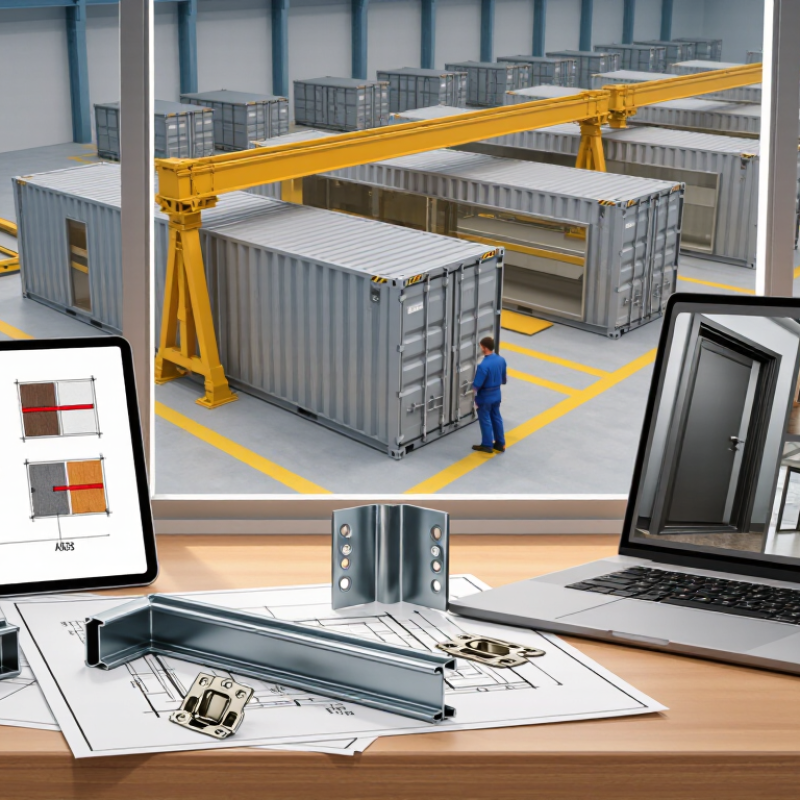
Define Antbox Container Needs by ISO 668’s 20-Foot and 40-Foot Classes
How to Choose the Best Antbox Container Supplier in China?
Define Antbox Container Needs by ISO 668’s 20-Foot and 40-Foot Classes
ISO 668 groups standard freight containers into size classes. A nominal 20-foot unit is about 6.06 metres long externally; a 40-foot unit is about 12.19 metres. These figures help narrow your order, but they do not tell you the usable interior space. Door openings, wall thickness, and container condition affect what fits. Measure your largest item, including pallets and handling clearance, before requesting a quote.
A 20-foot container may suit compact, dense cargo, while a 40-foot unit offers more floor length for bulky goods. Check the gross weight rating and payload on the specific unit’s data plate. Ask suppliers for drawings, external and internal measurements, tare weight, and clear photos of the doors and floor. Confirm whether the quoted height is standard or high-cube; the difference matters for tall loads. Small details count.
Tips: Send the supplier your cargo dimensions, total weight, loading method, and delivery location. Request measurements for the exact container type, not just a generic class sheet. If a measurement seems inconsistent, ask for clarification before paying; specifications can be easy to misread.
How to Choose the Best Antbox Container Supplier in China? - Define Antbox Container Needs by ISO 668’s 20-Foot and 40-Foot Classes
| Specification or Check | 20-Foot Class | 40-Foot Class | What to Confirm with the Supplier |
|---|---|---|---|
| ISO 668 nominal class designation | Series 1, 20-foot length class; commonly 1C or 1CC, depending on height | Series 1, 40-foot length class; commonly 1A or 1AA, depending on height | Request the exact ISO size/type designation and confirm it matches the intended equipment. |
| Nominal external length | 6,058 mm (about 20 ft) | 12,192 mm (about 40 ft) | Check the external dimensions on the approved drawing and consider transport, site access, and storage clearances. |
| Nominal external width | 2,438 mm (about 8 ft) | 2,438 mm (about 8 ft) | Verify door, loading, and installation clearances; usable internal width is smaller and varies by construction. |
| Common external height options | Standard: 2,591 mm (8 ft 6 in); high cube: 2,896 mm (9 ft 6 in) | Standard: 2,591 mm (8 ft 6 in); high cube: 2,896 mm (9 ft 6 in) | Specify standard or high-cube height and confirm the total height is acceptable for routes and facilities. |
| Typical internal dimensions | Approximately 5.9 m long × 2.35 m wide × 2.39 m high for a standard dry container | Approximately 12.0 m long × 2.35 m wide × 2.39 m high for a standard dry container | Treat these as indicative only. Obtain the specific unit’s internal and door-opening dimensions before planning cargo or equipment. |
| Capacity and payload | Capacity and payload depend on the container’s design, tare mass, and rated maximum gross mass. | Capacity and payload depend on the container’s design, tare mass, and rated maximum gross mass. | Request the data plate values for maximum gross mass, tare mass, and maximum payload; check applicable transport limits. |
| Cargo and use-case fit | Often selected when a shorter footprint or easier placement is important. | Often selected when longer cargo or greater floor length is needed. | Share cargo dimensions, loading method, total weight, operating environment, and any modification requirements. |
| Supplier documentation and quality checks | Confirm the offered unit’s dimensions, condition, rating, and inspection records. | Confirm the offered unit’s dimensions, condition, rating, and inspection records. | Ask for a dimensioned drawing, clear photographs, condition report, marking details, and relevant inspection or compliance documents. |
Note: ISO 668 specifies series 1 freight-container classification and principal external dimensions. Internal dimensions, tare mass, payload, and detailed construction can vary by design and manufacturer; verify the exact unit specifications before ordering.
Related Posts
-
What Are the 2026 Top Antbox Container Types for Buyers?
-
7 Antbox Container Buying Tips for Global Buyers
-
What Are the Top BTC Container Types in 2026?
-
What Is an Antbox Container and How Is It Used?
-

Best Asic Crypto Miner for Maximum Profitability in 2026?
-

2026 Top Crypto Containers for Global Buyers What to Know