China Top 10 Cryptocurrency Mining Container Suppliers
A Cryptocurrency Mining Container is more than a steel box with racks. It combines power distribution, cooling, monitoring, and protection in a compact, deployable facility. For operators, small design choices matter. A well-laid-out container can simplify maintenance, while poor airflow may leave hot spots between machines. Noise, service access, and the local climate also deserve attention.
This guide examines ten suppliers serving China’s cryptocurrency mining container market. It compares practical factors such as container configuration, cooling options, customization, stated capacity, and after-sales support. Mining analyst Jaran Mellerud’s published analysis emphasizes that electricity costs and hardware efficiency are central to mining economics. That perspective matters here: a low purchase price alone says little about long-term operating value. Buyers should request clear specifications, cooling assumptions, electrical diagrams, and references for comparable deployments. Claims about capacity are difficult to assess without knowing the hardware, ambient temperature, and operating conditions behind them.
There is no perfect ranking. Supplier information can change, and public product details may not reveal field performance. Treat this list as a shortlist, not a guarantee. Before committing, compare written offers and confirm that the proposed design fits your site, power supply, maintenance plan, and applicable requirements. A container can look excellent in a brochure. Real conditions are less tidy.
Understanding Cryptocurrency Mining Containers and Their Role
China Top 10 Cryptocurrency Mining Container Suppliers
Understanding Cryptocurrency Mining Containers and Their Role
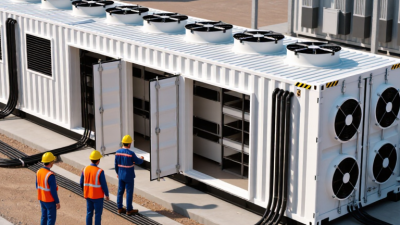
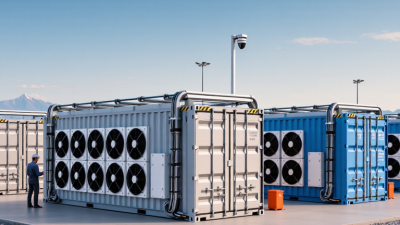
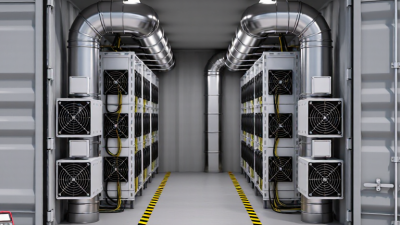
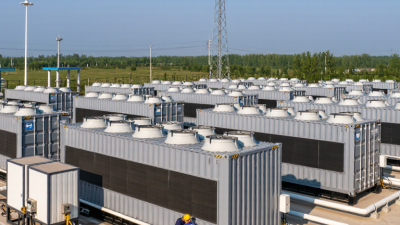
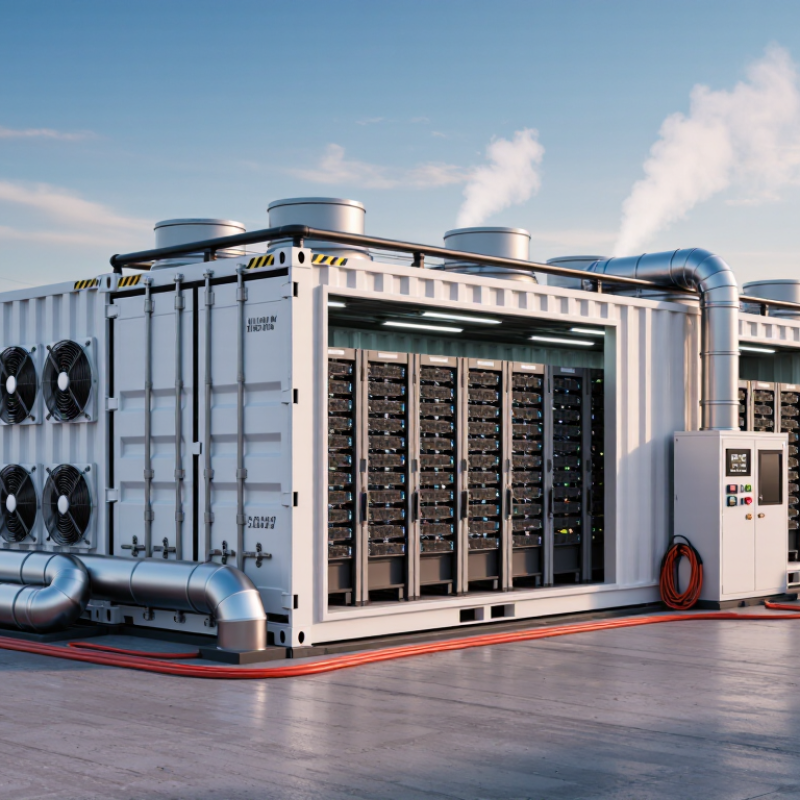
A cryptocurrency mining container is a modular enclosure for housing mining equipment, electrical systems, and cooling or ventilation equipment. It can simplify site setup by bringing these components together in a transportable structure. Inside, rows of machines draw power and release heat; airflow design helps move that heat away. Heat matters. Poor airflow can reduce equipment performance and increase maintenance needs.
The U.S. Energy Information Administration’s January 2024 issue brief estimated that cryptocurrency mining accounted for 0.6%–2.3% of U.S. electricity consumption. The International Energy Agency’s Electricity 2024 report projected that electricity use from data centres, artificial intelligence, and cryptocurrency could exceed 1,000 TWh in 2026. These figures underline why power supply, cooling, and energy monitoring matter when evaluating a container. A compact layout does not automatically mean efficient operation. Operators still need to check local climate, grid capacity, dust exposure, and noise. A clean specification sheet can make deployment look straightforward; real sites are messier, and cooling assumptions deserve careful review.
China Top 10 Cryptocurrency Mining Container Suppliers - Understanding Cryptocurrency Mining Containers and Their Role
The table below provides ten anonymous reference configurations for comparing mining-container requirements. It is not a ranked list of suppliers, and the specifications are indicative engineering ranges rather than verified offers from individual manufacturers.
| Reference configuration | Typical format | Indicative miner IT load | Approximate ASIC capacity | Cooling approach | Electrical service to confirm | Typical use |
|---|---|---|---|---|---|---|
| 01 — Compact air-cooled unit | 20-foot container | 250–400 kW | About 63–133 units | Forced-air ventilation | Three-phase low-voltage supply; confirm voltage, frequency, and protection design | Pilot deployments and smaller sites with suitable outdoor airflow |
| 02 — Standard air-cooled unit | 20-foot container | 400–600 kW | About 100–200 units | Filtered air intake with powered exhaust | Three-phase low-voltage supply; size switchgear and cables for the actual load | Modular expansion at sites with adequate power and dust management |
| 03 — High-density air-cooled unit | 20-foot container | 600–800 kW | About 150–267 units | High-volume forced-air ventilation | Confirm busbar or distribution-panel ratings, breaker coordination, and feeder capacity | High-density installations where local climate and airflow permit air cooling |
| 04 — Mid-range air-cooled unit | 40-foot container | 800 kW–1.0 MW | About 200–333 units | Forced-air ventilation | Three-phase service; verify transformer capacity and site connection requirements | Medium-scale operations seeking a single larger deployment block |
| 05 — Large air-cooled unit | 40-foot container | 1.0–1.2 MW | About 250–400 units | Multiple intake and exhaust sections | Confirm distribution layout, earthing, surge protection, and emergency isolation | Large sites with reliable grid or generation capacity |
| 06 — High-capacity air-cooled unit | 40-foot container | 1.2–1.6 MW | About 300–533 units | High-volume ventilation; filtration needs depend on site conditions | Check maximum continuous current and all equipment ratings against the final design | Power-dense sites with carefully engineered airflow and electrical distribution |
| 07 — Modular immersion unit | Containerized immersion system | 500 kW–1.0 MW | About 125–333 units | Miner immersion tanks with a liquid circulation and heat-rejection system | Confirm pump, heat-exchanger, and auxiliary loads in addition to miner load | Sites evaluating immersion cooling for noise control or heat management |
| 08 — Large immersion unit | 40-foot container or containerized plant | 1.0–1.5 MW | About 250–500 units | Immersion tanks with external dry coolers or another engineered heat-rejection system | Review cooling-system power, fluid compatibility, and maintenance access | Large operations designed around immersion-compatible mining hardware |
| 09 — Direct-to-chip liquid-cooling unit | Containerized rack system | 500 kW–1.2 MW | About 125–400 units | Cold plates and a liquid distribution loop; hardware compatibility is essential | Confirm coolant distribution, pumps, heat rejection, and rack-level power design | Projects using miners specifically designed or adapted for liquid cooling |
| 10 — Site-specific modular block | Multiple containers or custom layout | Capacity set by the site power plan | Depends on miner model and available IT load | Air, immersion, or direct-to-chip cooling as designed | Validate the complete site single-line diagram, utility connection, and operating limits | Large projects requiring staged deployment or a mix of cooling technologies |
ASIC counts are rough estimates calculated from the stated IT-load range using an assumed 3–4 kW per miner. Actual capacity depends on miner model, operating settings, distribution losses, auxiliary equipment, and reserved electrical margin. Container dimensions, voltage, frequency, cooling performance, and certifications should be confirmed against the final project design and local requirements.